

Proposals Redesign
Reducing new partnership onboarding time 40%.


Medium length hero heading goes here
Lorem ipsum dolor sit amet, consectetur adipiscing elit. Suspendisse varius enim in eros elementum tristique. Duis cursus, mi quis viverra ornare, eros dolor interdum nulla, ut commodo diam libero vitae erat.
AI Product Transformation
Lorem ipsum dolor sit amet, consectetur adipiscing elit. Suspendisse varius enim in eros elementum tristique. Duis cursus, mi quis viverra ornare, eros dolor interdum nulla, ut commodo diam libero vitae erat.
Proposal Redesign
Reducing new partnership onboarding time 40%.
Overview
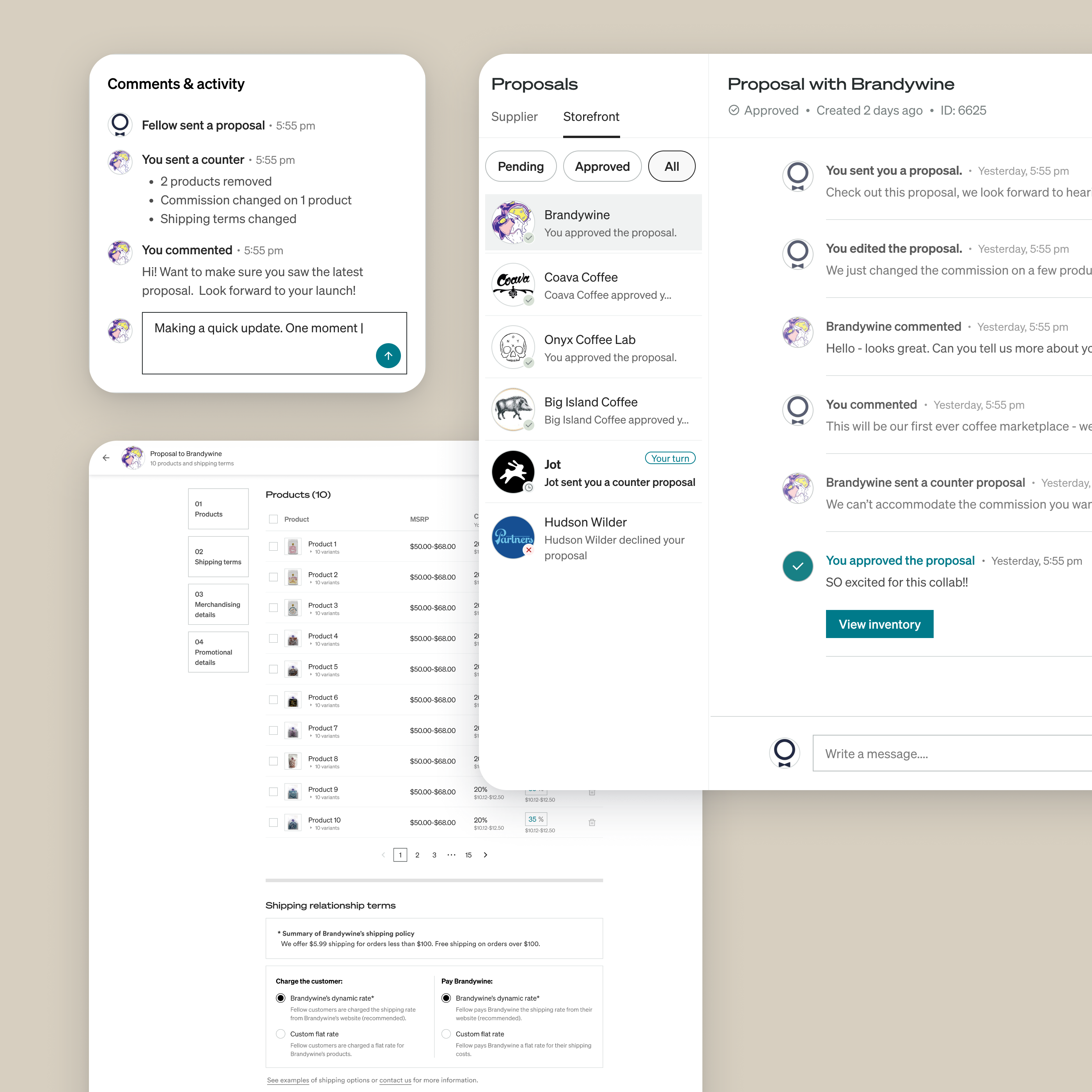
Our original MVP enabled one-way proposals to kick off partnerships, but users struggled with drawn-out email negotiations that had to be manually completed in the app. This redesign brought collaboration and decision-making into Canal to streamline the entire process.
My Role
I partnered with a UX researcher to lead a study uncovering pain points in the existing proposal flow. From there, I designed the end-to-end experience, collaborating closely with PMs and engineers to align on scope, validate solutions, and ensure a smooth handoff into development.
Impact
- 40% reduction in time to launch new partnerships
- Fewer user errors through clearer flows and review steps
- Faster, in-app communication replaced back-and-forth emails
- Higher conversion—more partnerships initiated and accepted
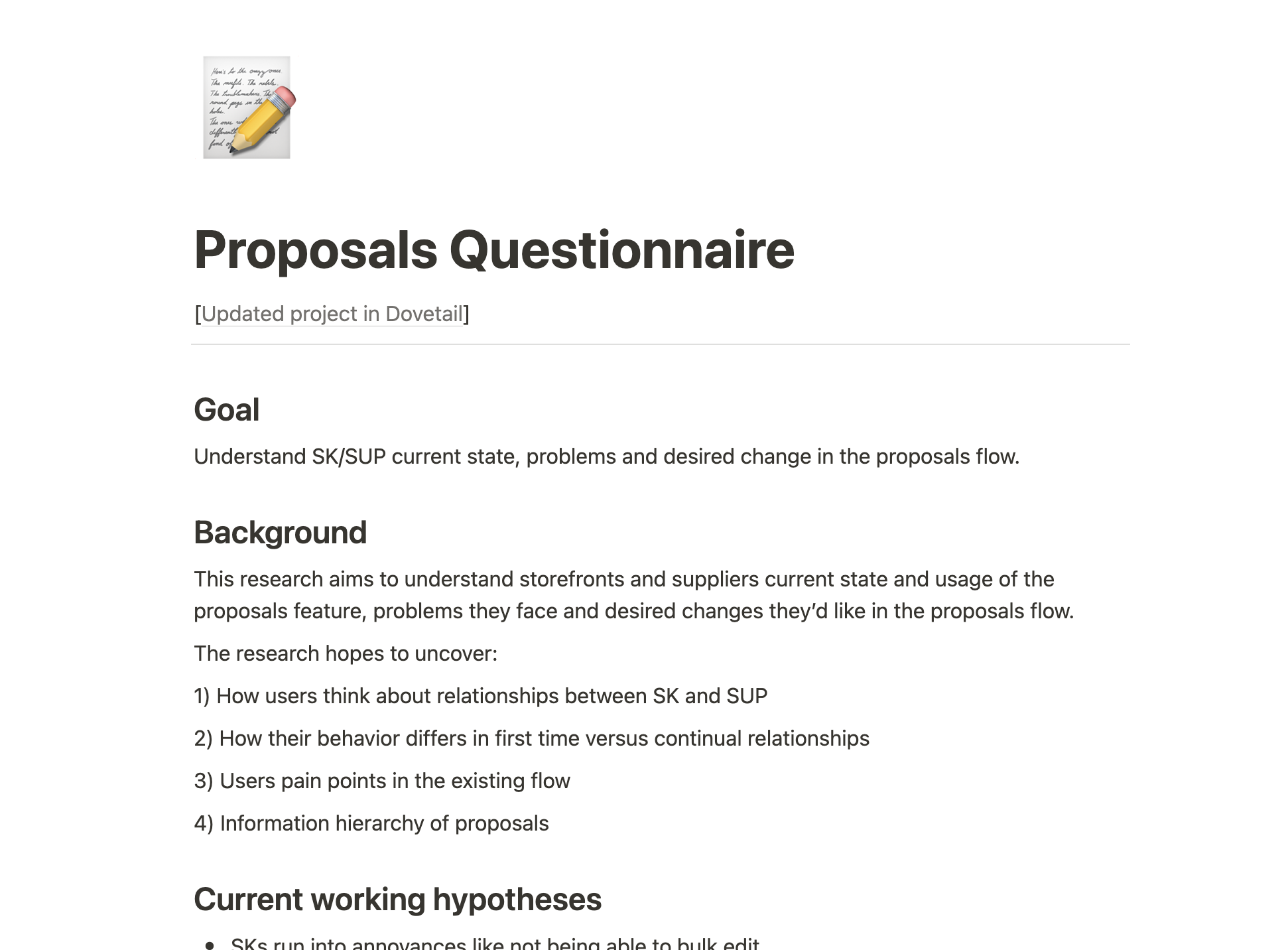
Reaching an agreement on terms (products, commission & shipping) is a lengthy process with a lot of back and forth.
Communication is key but it’s hard to keep track of the latest agreed upon terms while communicating over email.
In recognizing the dynamic nature of partnership negotiations, the goal of the redesign was to reduce the time to onboard new partners.
Trends & Findings
Email was Hard to Follow
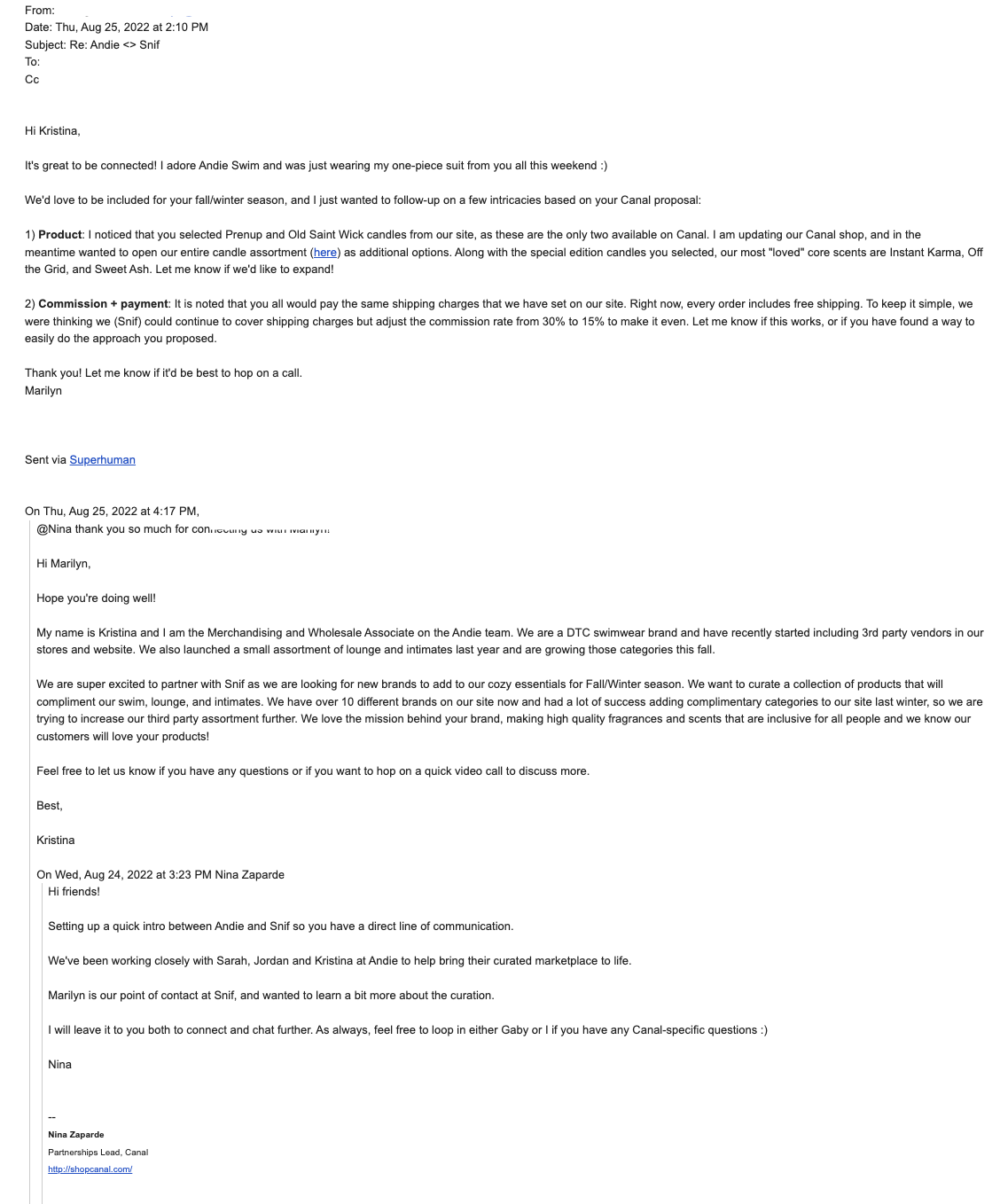
There was a trend of lengthy back and forths via email that were hard to follow and took a very long time to align. All to then have to execute changes it within the Canal app.
Missed Opportunities
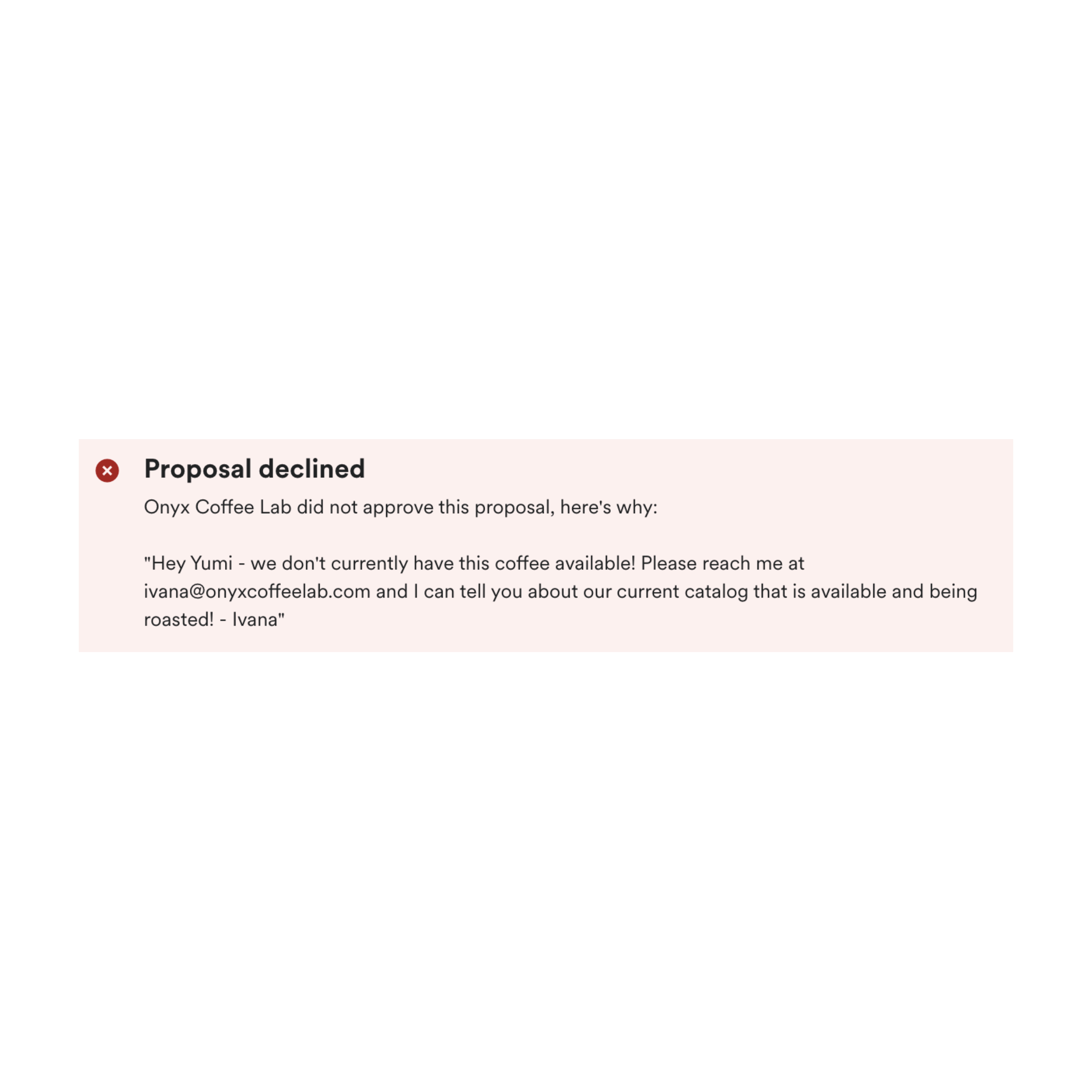
26% of proposals were declined because of terms even though the partnership interest existed.
Cursory Mistakes
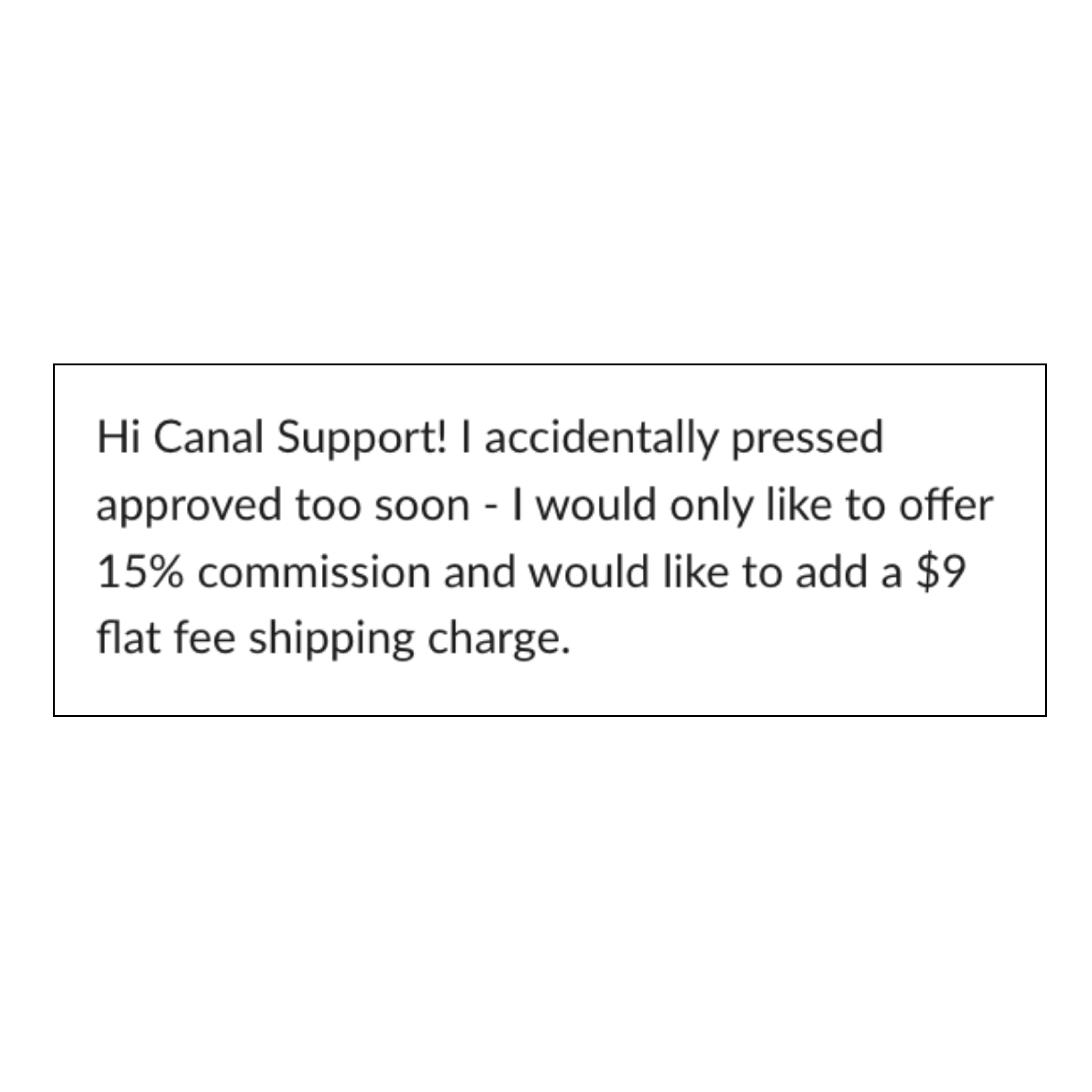
12% of proposals were sent with mistakes which had a direct impact on user's business' and resulting in our support.
Summary of Qualitative & Quantitative data
Negotiation
There’s give an take and the ability to negotiate is key when there’s many factors involved (such as shipping costs)
Communication
Communicating outside of Canal (via email) was confusing to users -and updates are made in relation to the discussion
Error prevention
Our users move quickly, and one wrong click could jeopardize their business. Our team has had to make numerous updates due to wrongly approved proposals, so the need for some beneficial friction was necessary.
Collaborating with Product & Eng
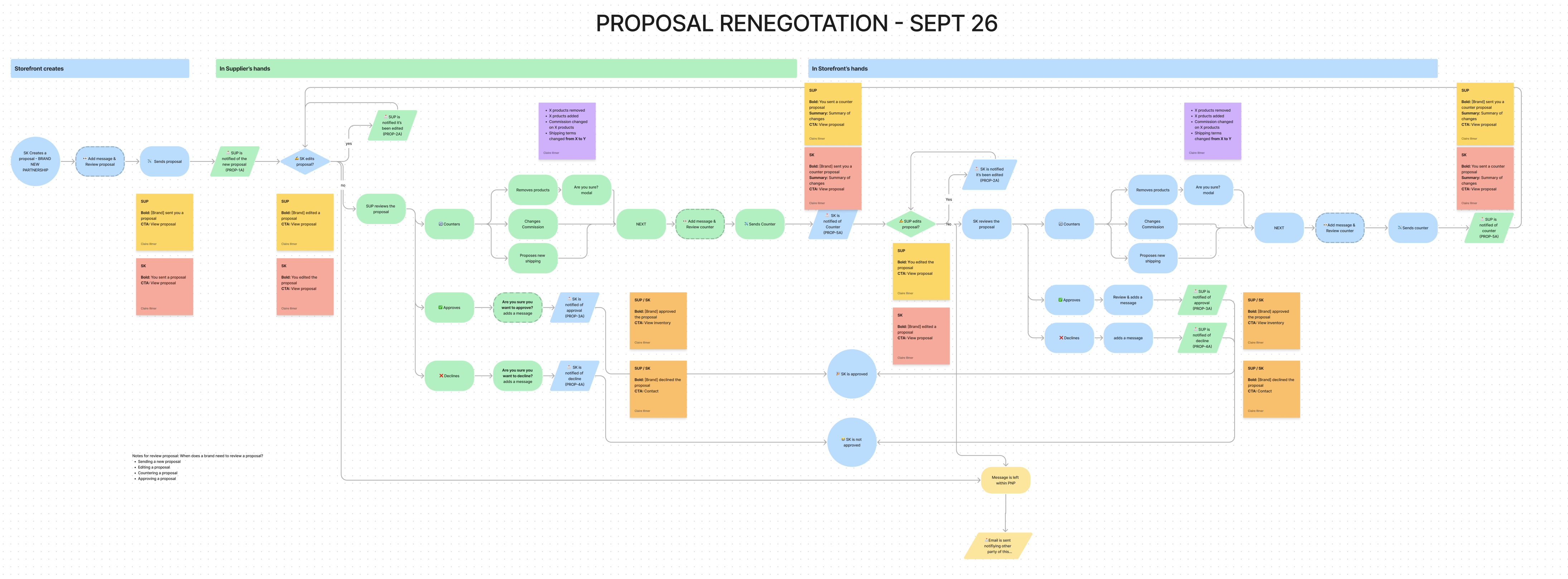
Aligning on the User Flow
We wanted the backend team to start building while the design team was designing. There was some confusion on what happened when this happened, of course, so I mapped out the new user flow in it’s entirety. This not only created alignment on what we were building but also helped speed up the feature.
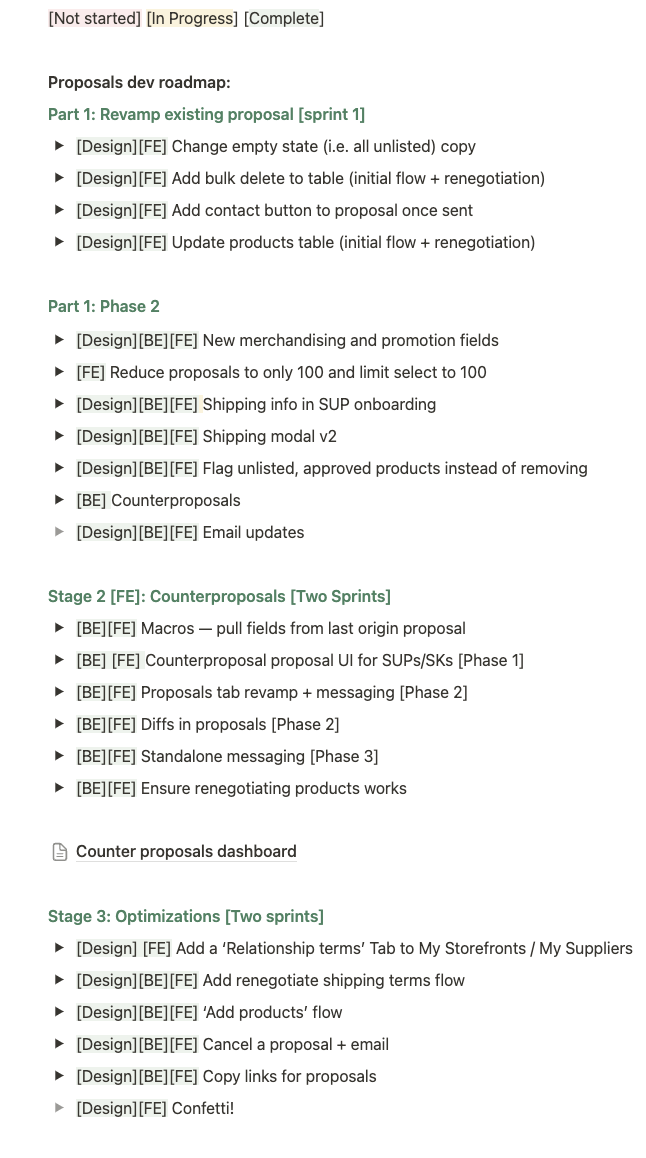
Roadmapping
I worked with our product lead to prioritize features based on user research. While engineering raised concerns—especially around communication—we shared real examples to build empathy and align on impact. This helped gain buy-in and motivated the team to tackle the complexity head-on.
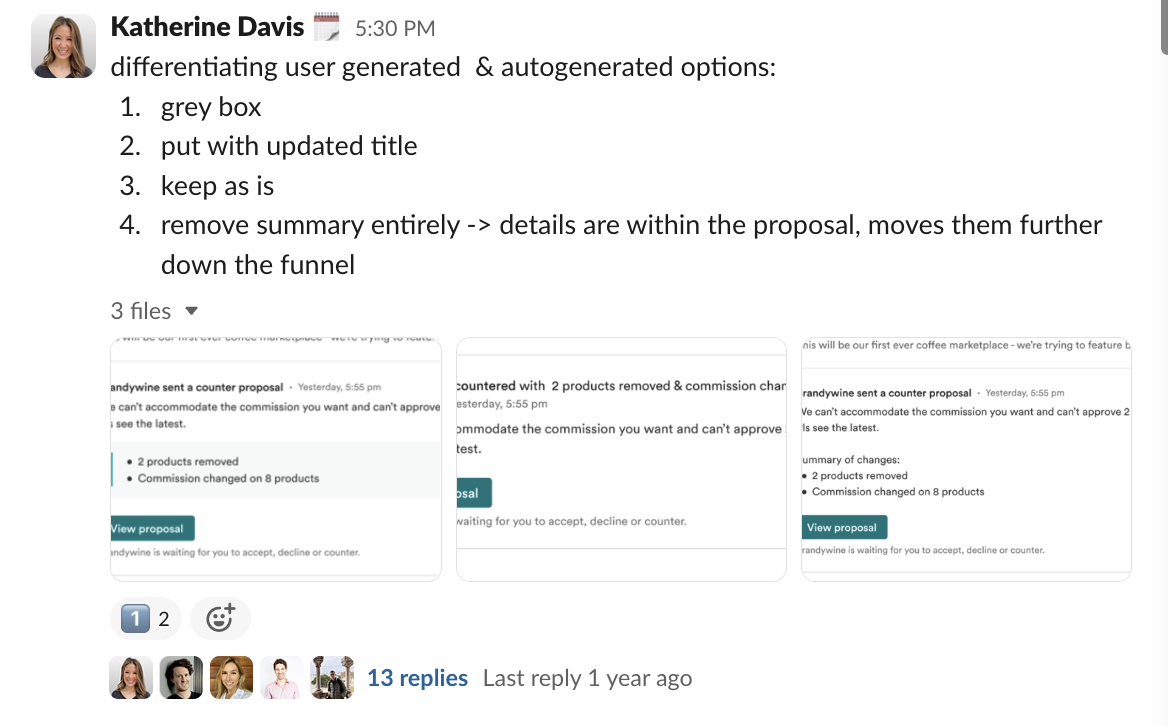
Ideating & Iterating
In addition to our live design reviews, if there was every any disagreement or other opinions we wanted on designs, I would initiate discussions on Slack. This allowed us to collectively explore and better understand the optimal path forward. Here's an example:
Key Features Built for Partnership Ease
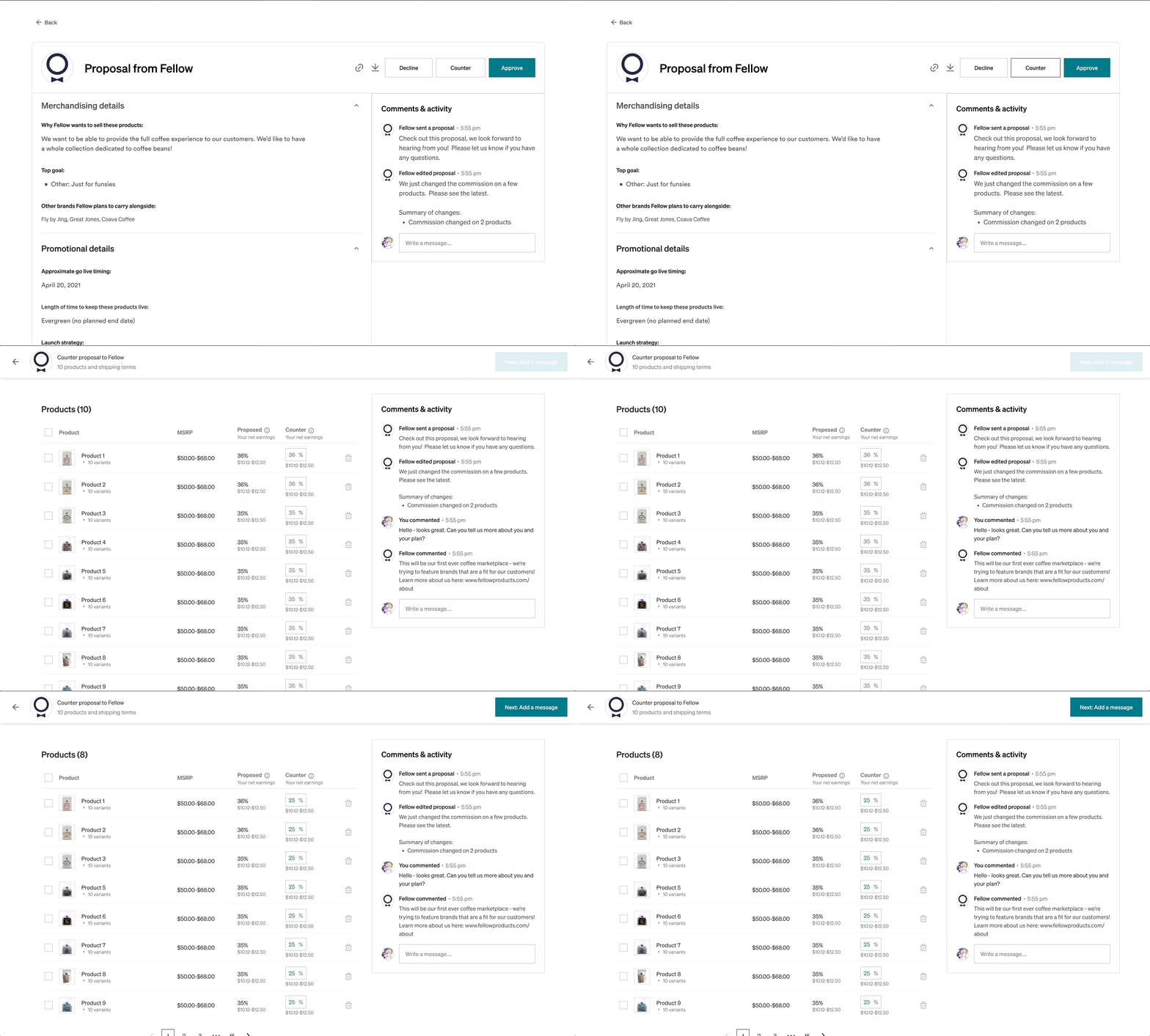
Easy Countering
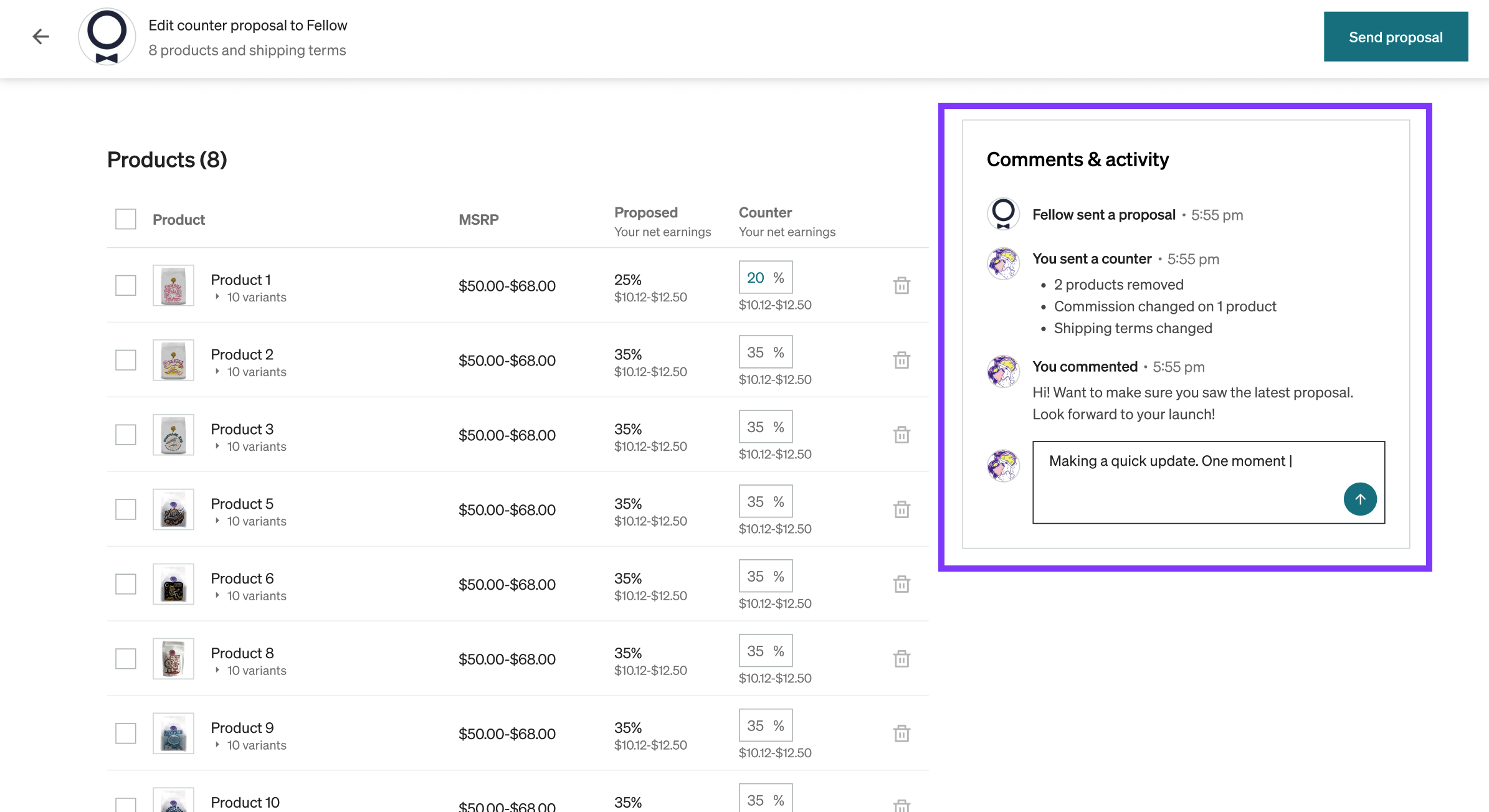
Countering allows partners to add/remove products and propose new commission & shipping. These are key factors that can make or break a partnership.
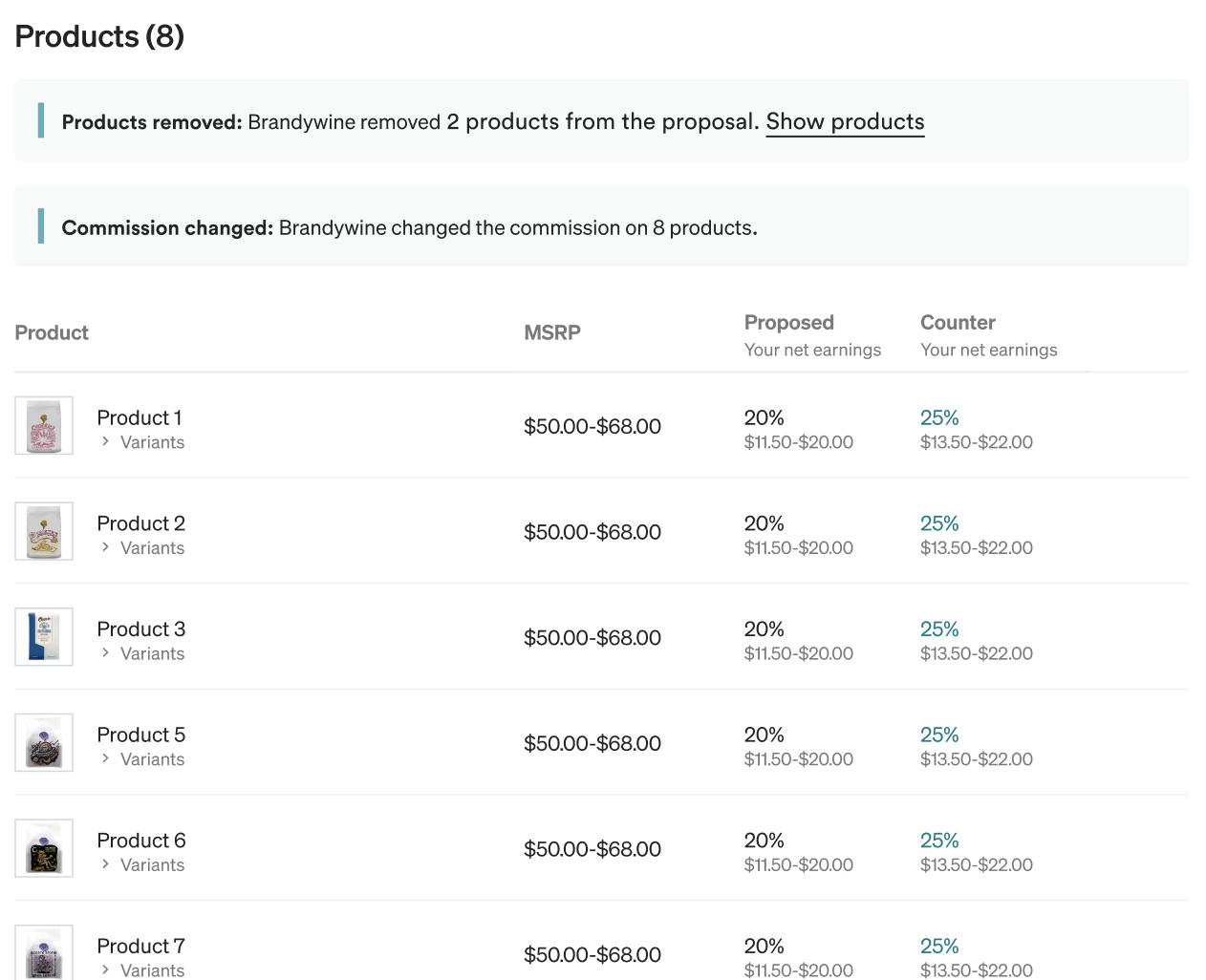
Change Log
When countering or editing a proposal, we keep track of what was changed so that the partner is aware prior to approving.
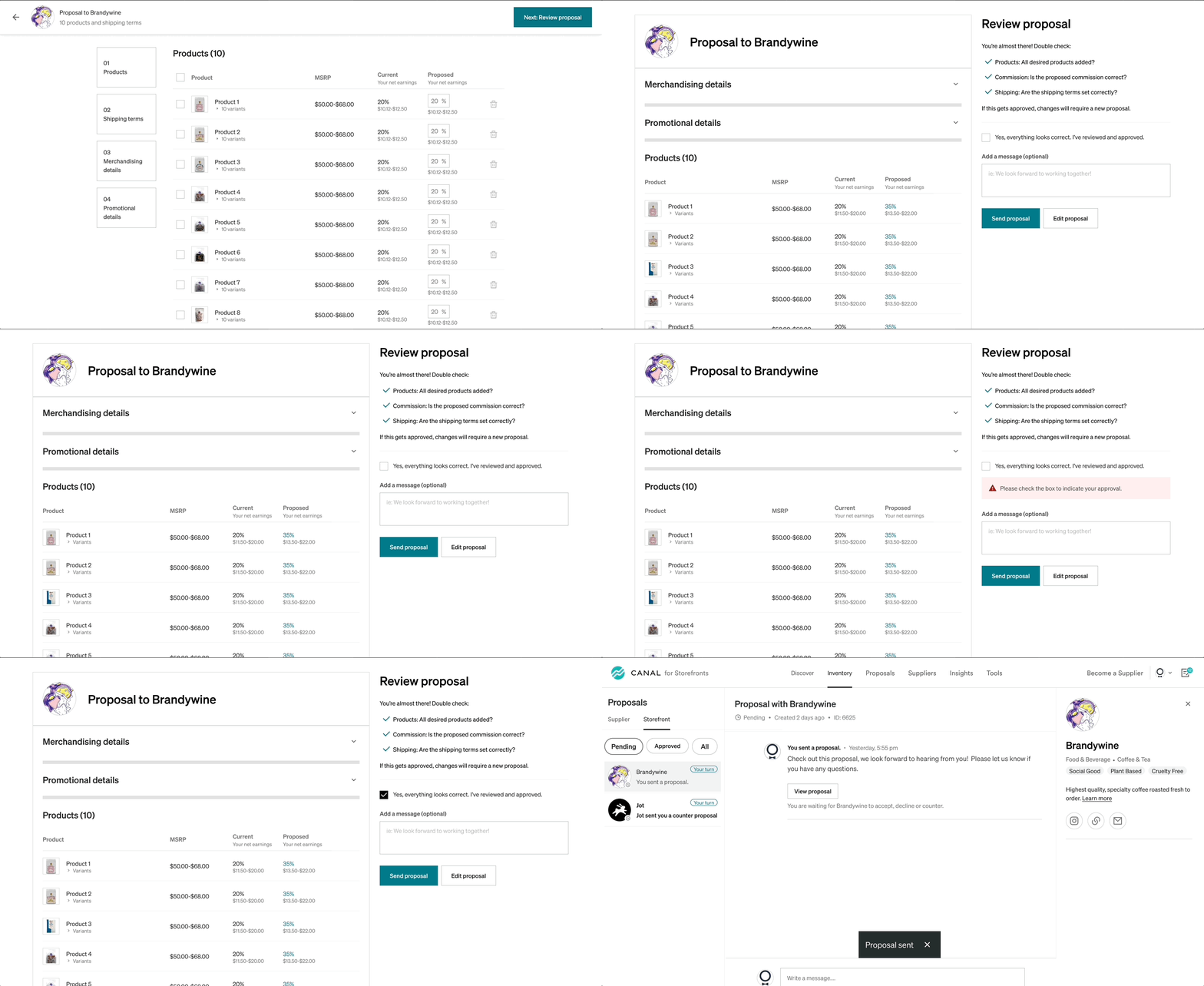
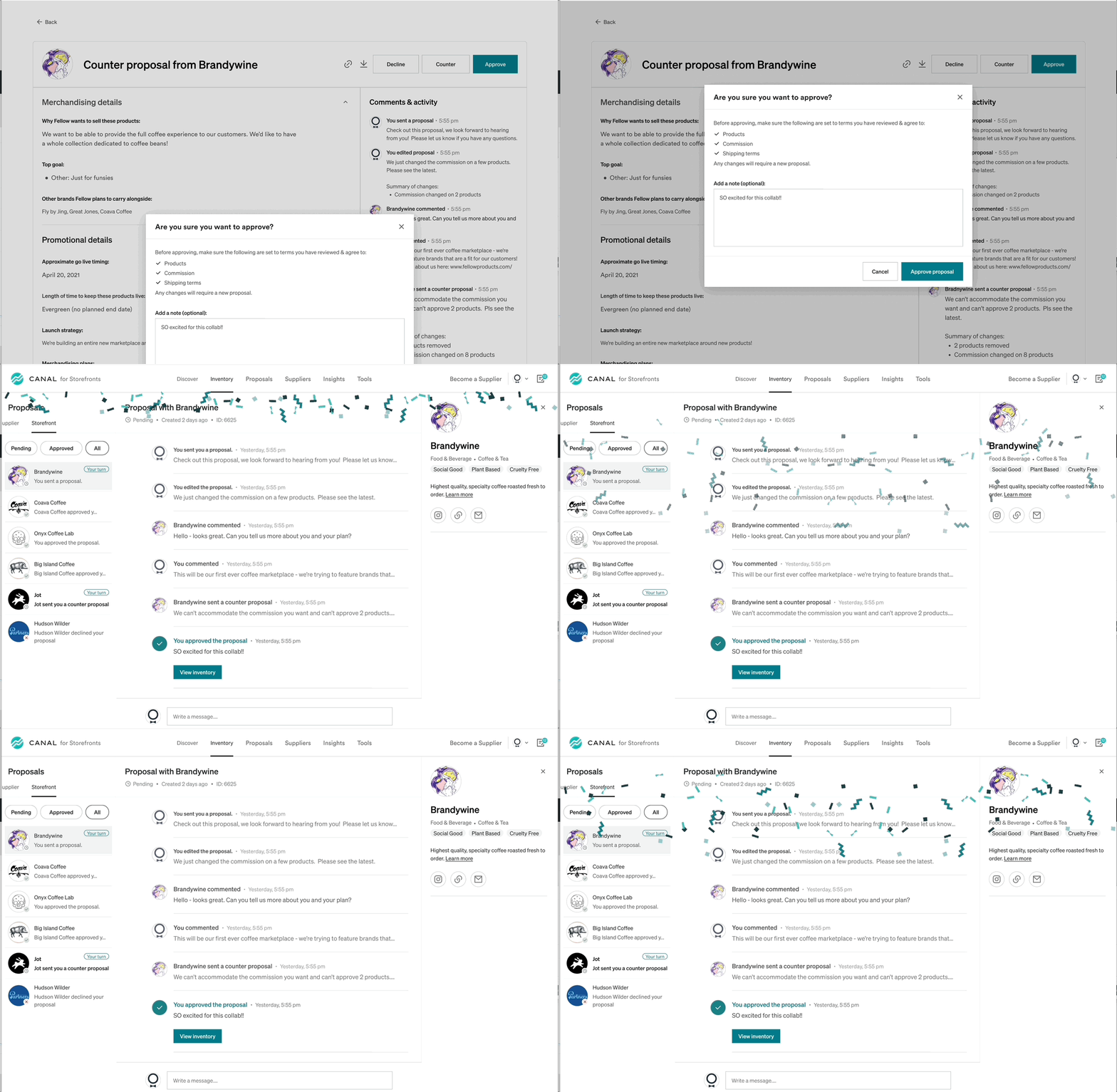
Intentional Friction
To reduce proposal errors, we added a review screen to introduce intentional friction. One user shared: “I didn’t make any mistakes thanks to this layout… I can’t emphasize how well this went.”
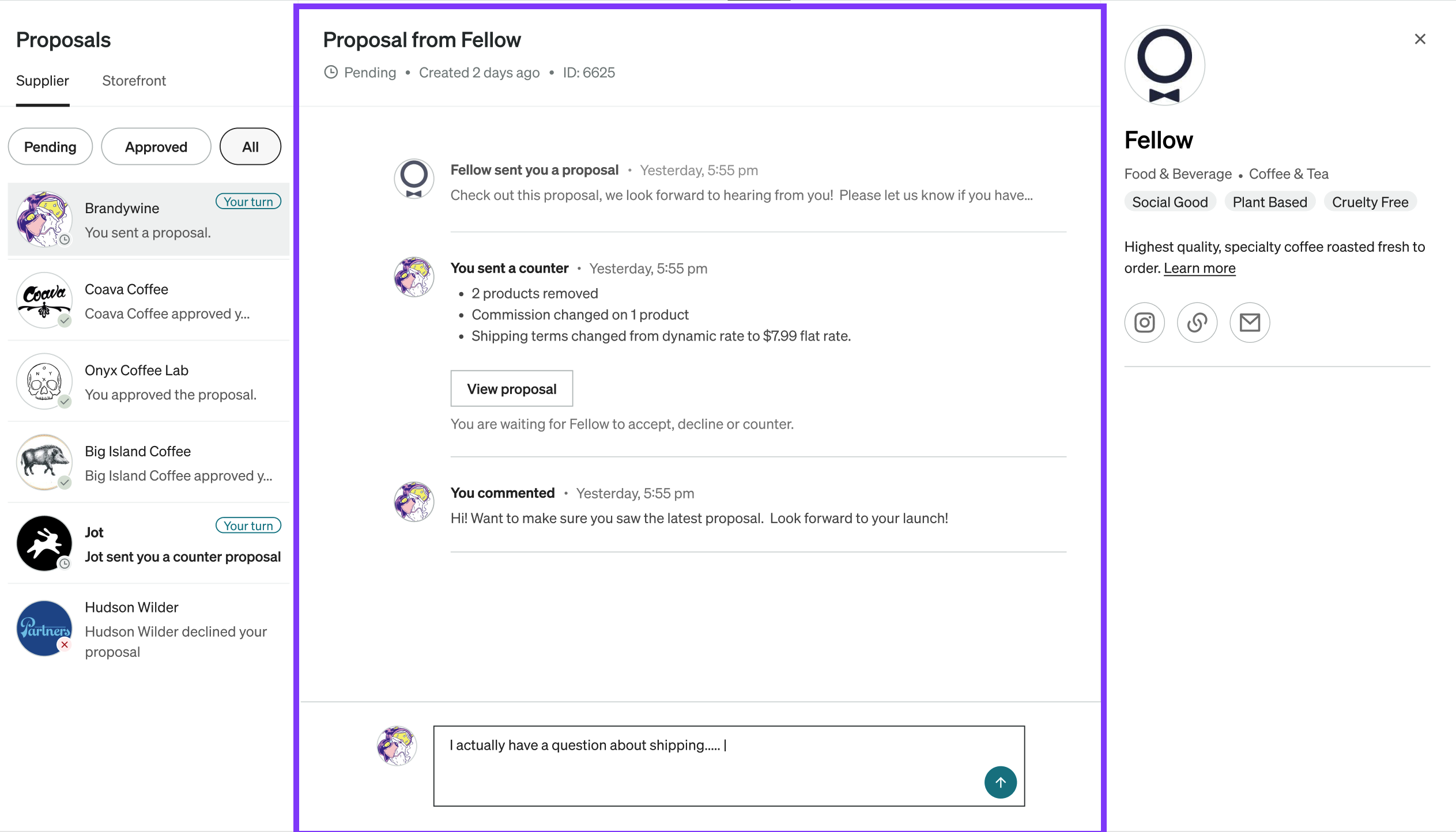
Inbox Messaging
Referencing communication throughout the proposal process allows brands to focus on the contract without having to leave. The message thread carries from initial touchpoint to editing, countering or approving.
Proposal Messaging
The messages from the inbox carry over to the proposal view for convenient reference.
Math-ing the Math
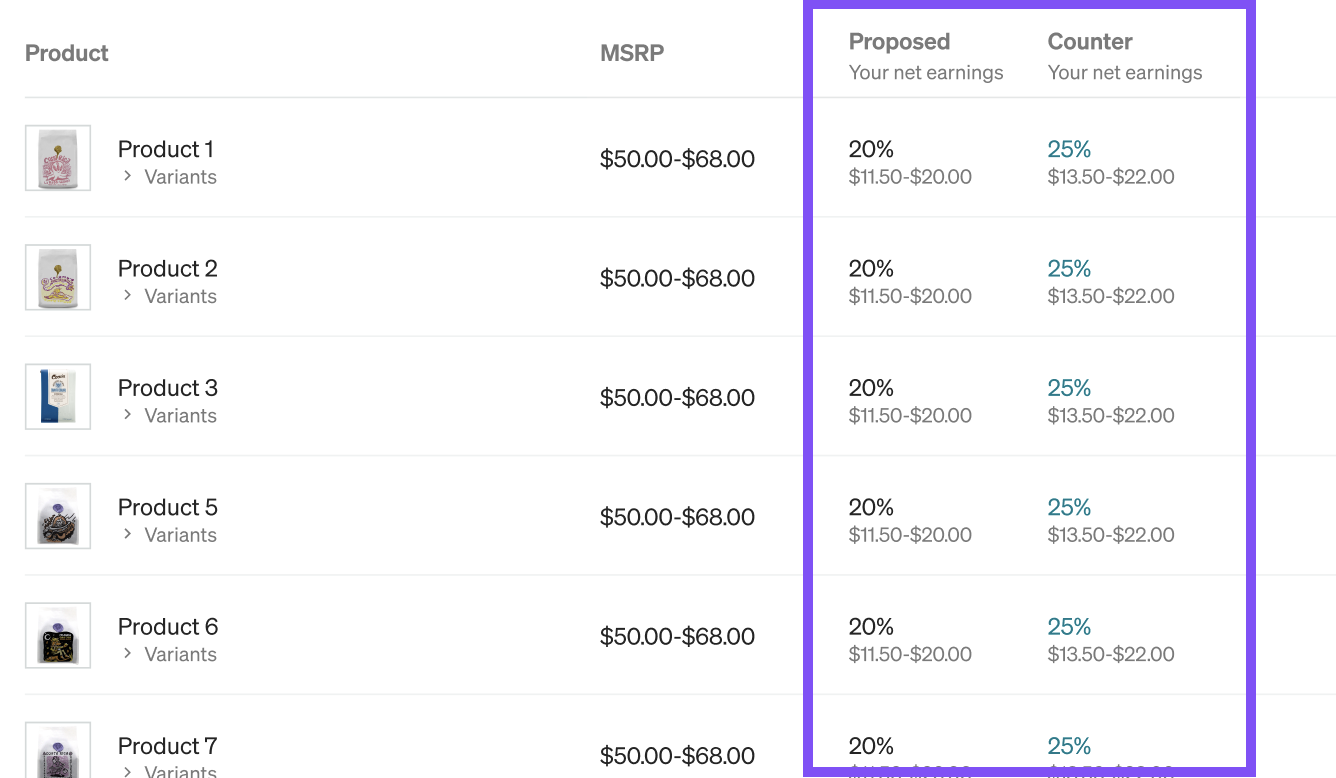
In the MVP, showing only the Storefronts percentage caused confusion—users missed Canal’s share. We now display net earnings to clarify economics and help users make informed partnership decisions.
"Your Turn"
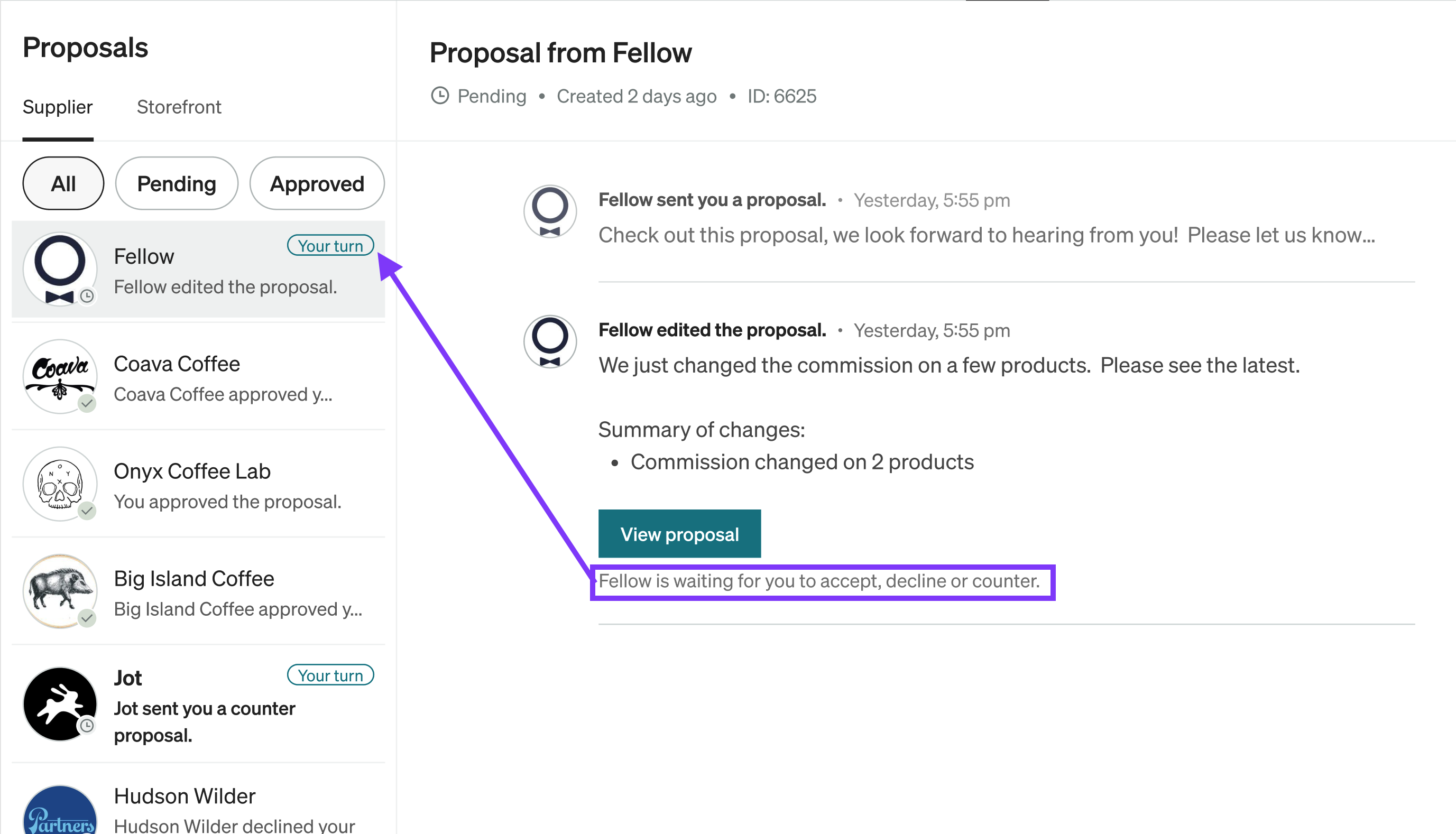
Our users value guidance, so we made it clear whose turn it is to act—taking a cue from Hinge to set clear expectations and reduce ambiguity.
Celebratory Acceptance!!
To mark the milestone of a new partnership, I worked with brand design to add a confetti Lottie animation—bringing a small moment of joy to the approval experience.
Testing Before We Build
Before handoff, we ran a usability study using UserTesting to spot any final gaps. Feedback was overwhelmingly positive—one user shared, “If someone sent me a proposal on an app like this, I’d be super impressed… it looks amazing, super professional, simple, easy to understand. I’d be all in.”
Systematic Handoff for Scalable Implementation
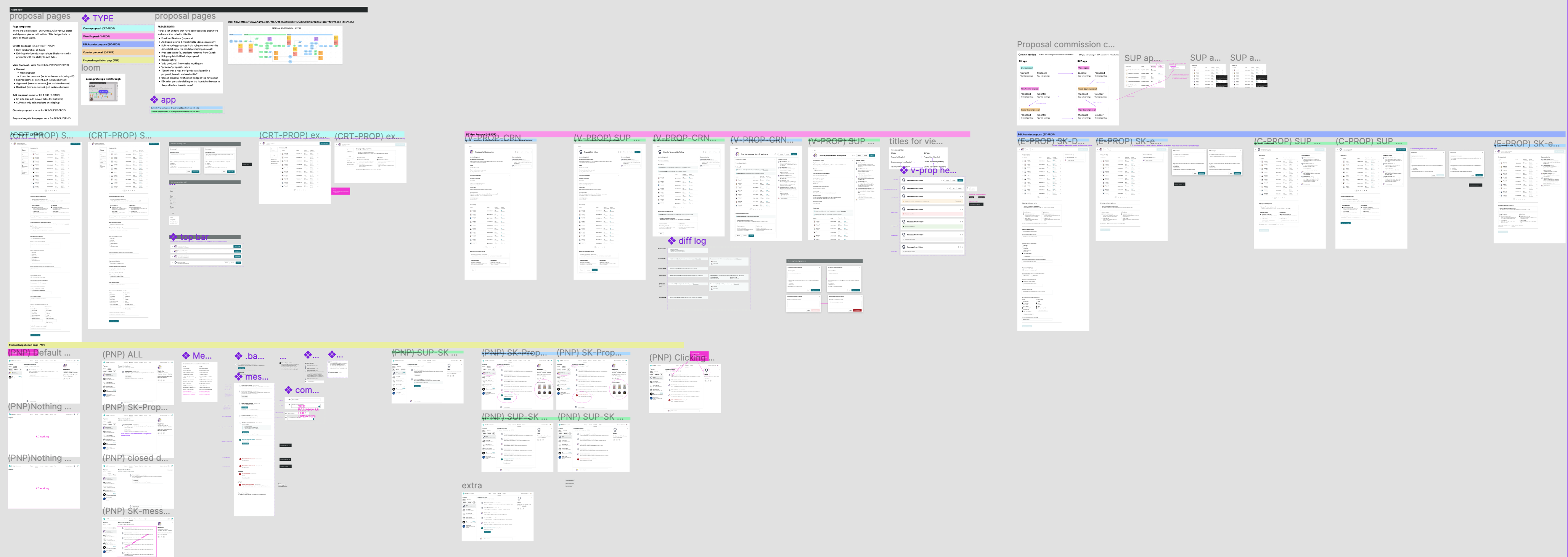
To support both apps, I approached handoff systematically—ensuring shared UI components could be reused while clearly documenting key differences for engineering.
Faster Partnerships, Happier Users
Wes saw a 40% decrease in the time it took for brands to partner, greatly accelerating the time to launch. Additionally, users have loved the ease of communicating, negotiating, and agreeing on terms and in launching a microsurvey, saw a 60% 🤩 satisfaction score. You can watch a snippet from a case study where one of our users, Erica, mentions the ease of negotiation on Canal: